Peugeot-Citroën factory in Villaverde
Centro de Madrid de PSA Peugeot Citroën en Villaverde

The Peugeot-Citroën center in Villaverde, formerly Barreiros, a pioneer in the Spanish vehicle industry and a great contributor to the Spanish economy, is a human-made landscape in itself. As the last big standing industry in Villaverde, the center has more than 60 years of activity, and up until the present has produced more than 3 million vehicles, the majority of which were destined for export.
The surrounding infrastructure (accessibility to M40, M30, the highway to Andalucia and the factory's own internal railway) allow for easy transit of trucks and goods to the centre of Spain and to the rest of the world. The factory values its 1.842 employees, and strives to take good care of them, providing them with transport to and from work, good medical services, safety insurances.
The recent situation of a struggling economy has greatly impacted the industry sector, and the center in Villaverde was affected as well - at the end of last year, it signed an ERTE for 1311 employees, to minimise losses caused by the lack of demand. It was not the first time this happened, as the company has signed 3 EREs since 2014.
The urbanistic situation puts even more pressure on the location of the factory, as it is now caught between the expansion of Madrid and the urgent necessity of extension that Villaverde has. Although the management of the company has declared multiple times that it has no intention of closing its activity in the South of Madrid, the factory is facing a crisis on multiple plans: economically and urbanistically.

Contributed by: Alexandra Enescu

Dak Akker, a rooftop garden in the Schieblock, Rotterdam

ENG
The design office ZUS took the Schieblock, an abandoned building from the old Rotterdam City District office complex, and converted it into an urban laboratory that currently functions as an incubator for young entrepreneurs. On the ground floor there is a bar, shop, restaurants, information center, workshops and on the roof there is a field called Dakakker, the first urban garden on a rooftop of Europe that has become a prototype replicated for sustainable developments. Assuming a source of fresh produce for the different neighborhoods of a city that lives basically from the thousands of commercial transactions that are carried out in its port area, the rotating crops pretend to offer seasonal foods at a super adjusted price, maintaining the quality of the product and guaranteeing its good condition.

ESP
El estudio ZUS tomó el Schieblock, un edificio abandonado del antiguo complejo de oficinas Rotterdam City District, y lo convirtió en un laboratorio urbano que actualmente funciona como incubadora para jóvenes empresarios. En la planta baja hay bar, tienda, restaurantes, centro de información, talleres y en la azotea hay un campo llamado Dakakker, el primer huerto urbano en una azotea de Europa que se ha convertido en un prototipo replicado para desarrollos sostenibles. Suponiendo una fuente de productos frescos para los diferentes barrios de una ciudad que vive básicamente de las miles de transacciones comerciales que se realizan en su recinto portuario, los cultivos rotativos pretender ofrecer alimentos de temporada a un precio super ajustado, manteniendo la calidad del producto y garantizando su buen estado.

Contributed by: Dana Barale, Cristina, David, Fernando

De Ceuvel

(see also this post)
De Ceuvel is situated in the former industrial area of Buiksloterham and is one of the pioneers in the transformation of this polluted zone into a sustainable residential area. Consequently, in the area around de Ceuvel many sustainable projects are now being realized, amongst which many DIY buildings, sustainable living on the water (Schoonschip), Waternet's bio-refinery, compost toilets, heat exchanger, solar energy (De Ceuvel is equipped with over 150 Photovoltaïc (PV) panels that generate energy from the sun), upcycling (De Ceuvel has been built largely out of recycled materials), aquaponics greenhouse, Café de Ceuvel is currently building the world’s very first Biogas Boat. This boat has the ability to convert organic waste into biogas that will be used to cook with in the restaurant. In this way, de Ceuvel reduce its waste production, contributing to an increasingly sustainable circular economy.

The former industrial plot is a thriving community of entrepreneurs and artists, where all involved have lent a hand to build Amsterdam’s first circular office park. The plot hosts creative workspaces, a podium, a sustainable café, spaces (recycled boats) to rent, and in the near future - a floating bed & breakfast.

Contributed by: Dana Barale, Cristina, David, Fernando 

Mining Waste - Street Cleansing in the UK

Waste is produced in huge quantities the world over, and as such must be considered as a viable resource if we are ever to establish a circular economy.
One way in which cities can be ‘farmed’ for valuable product in their waste is through street sweeping. In the past all street sweepings have been sent straight to landfill due to their ‘mix of dust, leaves, stones, cans and plastic bottles’, but now companies such as Veolia have developed new machinery combining sieves, conveyors and washers to create a process that is essentially a modern-day up-date of panning for gold.
Collected cans and bottles can be sent for recycling and stones used for restoration work. Even the remaining dust can be treated to extract traces of precious metals such as platinum, rhodium and palladium, which have ended up in exhaust fumes after being used in catalytic converters (combining with pollutants and thereby lessening those pollutants’ harmfulness).
Industry such as this should be the way forward; sustainable and economical – Veolia have generated over £150 million in selling materials extracted from that which was deemed waste and have simultaneously remained a net carbon positive company – city streets have inadvertently become a gold mine.
Currently separation plants are situated away from the large cities where this ‘waste’ is collected but this does not have to be the case – collection, processing and export could all be incorporated into a city’s working environment.

Contributed by: Bridget Bale

Carabanchel Production Node
Nodo de Producción de Carabanchel

ENG
The Carabanchel Production Node is a project for collectivization of means of production (a sewing machine, a hydroelectric plant, the cocoa cream formula, a fishing rod), so that all are capable of producing things outside of Capitalist enterprises. Understanding not only as a node of production but of self-management.
It is a way of conceiving the relationships between people, based on equality of all, autonomy and the link with a territory. It focuses on economic and production because it is an aspect that has traditionally been neglected among social movements and also one of the main ways in which we remain hooked to the economy of exploitation.
Right now there are many projects within the Node: Beers, carpentry, bike shop, vegan food, vegetable preserves, screen printing, soaps, sweets.
It is a node within a network of autonomous complementary projects: the social currency La Canica (to make the exchanges between producers and consumers), the Consumer Node of Carabanchel, the Social Center Okupado Eko (where they discuss themes and organize anti-consumerist parties Etc) All producers of the network accept marbles for their products and encourage the desertion of the euro and what it entails in all its forms to break the salaried work in its productive projects. The Carabanchel People's Assembly, neighborhood consumption groups, the Solar de Matilde collective vegetable garden, the neighborhood housing group, the Self-Defense Working Group and the Solidarity Pantry are other examples.

ESP
El Nodo de Producción de Carabanchel es un proyecto de colectivización de medios de producción (una máquina de coser, una central hidroeléctrica, la fórmula de la crema de cacao, una caña de pescar), para que todas sean capaces de producir cosas al margen de las empresas capitalistas. Entendiéndose no solo como un nodo de producción si no de autogestión.
Se trata de una forma de concebir las relaciones entre las personas, basada en la igualdad, la autonomía y el vínculo con un territorio. Se pone el foco en lo económico y la producción porque es un aspecto que se ha descuidado tradicionalmente entre los movimientos sociales y también una de las principales formas en las que seguimos enganchados a la economía de la explotación.
Ahora mismo hay muchos proyectos dentro del Nodo: Cervezas, carpintería, taller de bicis, comida vegana, conservas vegetales, serigrafía, jabones, dulces.
Se trata de un nodo dentro de una red de proyectos autónomos complementarios: la moneda social La Canica ( hacer los intercambios entre productores y consumidores), el Nodo de Consumo de Carabanchel, el Centro Social Okupado Eko (donde tratan temas y organizan fiestas Anticonsumistas de Intercambio de Juguetes, autogestión acuática, etc) a su vez todas las productoras de la red aceptan canicas por sus productos y alientan a la deserción del euro y lo que conlleva en todas sus formas para romper con el trabajo asalariado en sus proyectos productivos, la Asamblea Popular de Carabanchel, grupos de consumo del barrio, huerto colectivo del Solar de Matilde, grupo de Vivienda del barrio, grupo de Autodefensa Laboral, Despensa Solidaria son otros de los ejemplos.

Contributed by: Dana Barale, Cristina, David, Fernando

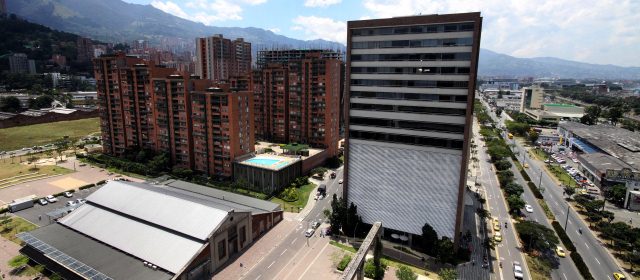
Integration of active exixting industry in urban renovation: Medellín


ENG
In Medellín (Colombia) there is a clear example of a productive city, it consists of an urban plan where strategically the industrial zones are strengthened and new ones are placed in the middle of a mixture of uses like houses, offices, commerce that also are connected through green corridors to an axis The main one being the river, generating an area of ​​much connectivity both at the city and country level since there the national highways pass and there is an easy transport for the products produced in the area. In the first stage of this plan in the river city area, to bring a large number of people to these public spaces so there is enough commercial activity, a museum, and offices that improve the quality of life of the housing sector , In addition industries also take advantage of all this activity to establish in the area which has attracted the attention of new industries outside the country that has brought therefore employment and productivity to the city.

Documento: Presentación Parques del Río, Ciudad de Medellín pdf
Artículo de presnsa: El Colombiano
ESP
Integración de industria existente y activa en un parque urbano: el caso Medellín.
En Medellín hay un claro ejemplo de ciudad productiva, consiste en un plan urbano donde estratégicamente se potencian zonas industriales y se ubican nuevas en medio de una mixtura de usos como viviendas, oficinas, comercio que además se conectan a través de corredores verdes a un eje principal que es el rió, generando una zona de mucha conectividad tanto a nivel de ciudad como de país ya que por allí pasan las autopistas nacionales y hay un fácil transporte para los productos producidos en la zona. En la primera etapa de este plan en la zona de ciudad del río, a llevar un gran número de personas a estos espacios públicos por lo que hay bastante actividad comercial, un museo, y oficinas que mejoran la calidad de vida de las viviendas del sector, además las industrias también se aprovechan de todo esta actividad para instaurarse en la zona lo que ha llamado la atención de nuevas industrias fuera del país que ha traído por ende empleo y productividad a la ciudad. 

Contributed by: Tomas Medellin, Toshio Pardo, Kiomi Aguilar

ARRANCA EUROPAN 14 / CIUDADES PRODUCTIVAS

ARRANCA EUROPAN 14 / Una cincuentena de ciudades de 14 países europeos, comprometidas con el tema de la edición, CIUDADES PRODUCTIVAS, someten a la reflexión de los arquitectos menores de 40 años emplazamientos urbanos que han sido clasificados de acuerdo con las siguientes familias temáticas:

1. DE ÁREA PRODUCTIVA A CIUDAD PRODUCTIVA
¿Qué tipo de urbanidad puede tener la logística y las zonas industriales?
Las áreas productivas de las ciudades están marcadas o bien por un urbanismo en polígonos de grandes naves bien comunicados con todas las redes metropolitanas, o bien por zonas de industria ligera adyacentes a los centros urbanos. Ambos modelos operan en forma independiente con respecto a sus áreas adyacentes, con usos mono-rítmicos.
El reto consiste en inyectar nuevas economías que generen sinergias entre los usos, pero también porosidades con el fin de conseguir entornos urbanos poli-rítmicos. ¿Cómo desarrollar espacios comunes que han de compartir los usuarios de las diversas actividades con los habitantes de las áreas circundantes?
ALTA (NO), AMIENS (FR), AMSTERDAM (NL), ANGERS (FR), BÈGLES (FR), ESSEN (DE), GRIGNY/RIS-ORANGIS (FR), HAMBURG (DE), HUY (BE), KRIENS (CH), LILLE (FR), TOULOUSE (FR), WIEN (AT)
 

2. DE CIUDAD A CIUDAD PRODUCTIVA
¿Cómo crear un distrito productivo vibrante, con artesanos, talleres y producción local?
Todas las ciudades aspiran a una mayor diversificación. Pero los planteamientos habituales para crear comunidades vibrantes suelen conjugar un imaginario de viviendas, oficinas, cafés y restaurantes, lo cual está bien, pero, ¿es suficiente?
¿No podríamos inyectar vitalidad en los barrios existentes mediante fomentando las actividades productivas? ¿Es la opción más viable en el caso de zonas residenciales de rentas bajas? ¿Qué significa producción para las industrias creativas y las que se basan en el conocimiento? ¿Qué equilibrio económico se necesita para atraer actividades productivas a medida que la zona mejora y los precios suben?
Son áreas en las que prima la voluntad de encontrar nuevas formas de actividad y de proteger o equilibrar la actividad existente.
ALCOY (ES), AMSTERDAM (NL), BARCELONA (ES), BESANÇON (FR), CUNEO (IT), KARLSKRONA (SE), LA BAZANA (ES), NARVIK (NO), NEU-ULM (DE), OULU (FI), PLAYA DE PALMA (ES), ZWICKAU (DE)
 

3. DE INFRAESTRUCTURA FUNCIONAL A CIUDAD PRODUCTIVA
¿Cómo pueden las nuevas formas de movilidad mejorar el grado de hibridación entre ciudad y producción?
Las infraestructuras resultan cruciales para posibilitar una economía dinámica en la ciudad. Sin embargo, a menudo se proyectan sin tener en cuenta su urbanidad: autopistas, aparcamientos o espacios intermodales provocan cortes aumentando el grado de fragmentación urbana.
La ciudad, que tiende hacia un modelo de movilidad suave ofrece nuevas oportunidades de reinvertir en estas infraestructuras para adaptarlas. Pero, ¿cómo garantizar que se induzca así una vida urbana más sostenible y una hibridación de programas que incluyan actividades productivas? ¿De qué manera reforzar las infraestructuras como terrenos propicios para la ciudad productiva? ¿Pueden, las vías de rodadas obsoletas, convertirse en calles productivas? ¿Y los aparcamientos sin uso, ¿pueden ser transformados en espacios productivos? ¿Podrían los nodos intermodales revalorizados convertirse en lugares productivos? ¿Qué nuevas tipologías pueden surgir de estas posibilidades?
AMSTERDAM (NL), AURILLAC (FR), ÉVREUX (FR), GRAZ (AT), HELSINKI (FI), MADRID (ES), MÜNCHEN (DE), TORNIO-HAPARANDA (FI/SE), TORRELAVEGA (ES), VINKOVCI (HR)


4. Y… ¡DE NUEVO PRODUCTIVA!
¿Cómo reintroducir la economía productiva en los nuevos barrios urbanos?
Muchos lugares, dentro y alrededor de nuestras ciudades, que antes eran industriales, se han quedado sin uso. Los edificios se abandonaron, las actividades se trasladaron o se cerraron, convirtiendo estos sitios en ruinas industriales. La obsolescencia es la característica común de estos emplazamientos y su futuro es incierto.
Aunque soñamos con transformarlos en nuevos y vibrantes barrios urbanos, si queremos evitar la total gentrificación, como ha ocurrido en el pasado en muchos proyectos de renovación urbana, tal vez deberíamos tratar de restituirles algo de su antigua actividad productiva, hacer que sean… ¿de nuevo productivos? Porque estos sitios fueron en un tiempo industriales y a la vez vinculados a la ciudad. Porque queremos una ciudad muy mezclada, y esa mezcla incluye también la economía productiva.
AMSTERDAM (NL), GUEBWILLER (FR), LINZ (AT), PANTIN (FR), ŠIBENIK (HR), TRELLEBORG (CH), TUBIZE (BE), WARSZAWA (SE), ZAGREB (HR)

12-acres of Solar Panels in the Center of San Fransico

The city of San Francisco has begun harbouring its own solar energy from the heart of the city with a twelve-acre, 5 MW solar photovoltaic system on the surface of Sunset Reservoir. Once an empty void in the built up metropolis, this area now serves two purposes; as a source of water and energy. Each year it is expected to reduce carbon emissions by more than 109,000 metric tons, and will power more than 15,000 San Francisco homes.
Can other infrastructures like railway tracks offer similar opportunities?

Contributed by: Charlotte Keers

Waste-to-Energy Facility in Malmö, Sweden


Malmö in the south of Sweden is one of the leading cities in the world for sustainability. By 2020 Malmö hopes to be climate neutral and by 2030 have all government services running with 100% of renewable energy. This is significantly higher than the European Union’s target for Sweden which is only 49% of renewable energy by 2020. The city hopes to hit these targets by a number of lifestyle and systemic changes.
These include a waste-to-energy facility in the city. This facility turns waste from 500,000 citizens into electricity and heat energy. In 2008 it expanded to become the largest plant in Northern Europe. The capacity of the plant is 630,000 tons of waste annually and it produces 1.4 TWh of heat and 0.3 TWh of power a year. It also has one of the most energy-efficient incineration plants in Europe. The plant has very high environmental standards with very low emissions, for example, it includes a number of wet flue gas treatments which helps reduce harmful gases being released into the atmosphere. The plant supplies power to the national grid and heat to the district heating system of Malmö, this covers 60% of the city’s heat demands.
Therefore Malmö is investing in its future with this major industry integrating into the fabric of the urban environment which helps locally with environmental issues of waste, electricity and heating.

Contributed by: Claire Wilkinson

NEWater - Water Production in the the City of Singapore


NEWater is the brand name given to reclaimed water produced by Singapore's Public Utilities Board. More specifically, it is treated wastewater (sewage) that has been purified using dual-membrane (via microfiltration and reverse osmosis) and... read more
In Singapore they are not just cleaning sewage water, they are "producing" new water in the city (Singapore is all city), bottled and sold as drinking water..

They are not just "mitigating" problems of the water system, they are turning the system around.

Note that the bottled water is symbolic, it is not the driver, they are using it to visualize the fact that reclaimed water (reclaimed from sewage) is good to drink - more than ok, it is actually too pure for humans: we would need the minerals that dissolve in water as it filters through the soil and runs down the mountains; we need grittier water. 
It just proves the point that NEWater can be safely used in industry (generally the largest consumer of water) at a huge scale.

NEWater plants are designed so that they can be visited and become part of the culture and the urban landscape.

Why? - ¿Por qué?

ENG.
Here are some reasons why we are focusing on this topic. Do you agree? Do you have other reasons?
Please feel free to comment.

  • a holistic community cannot exclude makers; and yet, our cities have been pushing production to the fringes and beyond. City planning has consistently focused on leisure and housing as the drivers for development, turning cities into sink-holes of consumerism. What can we do to develop "vibrant" communities where the vibrancy is not entrusted to cafés, cinemas, restaurants and expensive housing? Can "Making Things in Town" be an exciting proposal? Is anyone trying this? 
  • a key to the sustainability of our societies is minimising transport. The carbon footprint of pendulum movements of people and goods is a major driver for climate change. There is something better than renewable energy: reducing the need for energy, and specifically, reducing the need for transport. There are many ways to tackle this, but one of them is to integrate makers and their infrastructure (storage, workshops, factories) in our cities. "Making Things in Town" minimises "van miles", the pendulum movement of vans going in and out of the city. Are there any good examples of this? 
  • there are new technologies for clean production that can be integrated in a healthy living environment. On the other hand, we cannot afford to have "dirty" technologies anywhere, no matter how far from the city centre. There is no longer an "outside" to our living environment, the whole planet is "inside" our ecosystem. So, if industry cannot be polluting anywhere any more, can we integrate it in our urban landscape? Can we make it desirable? Is anyone doing it?
  • sustainable management of resources leads to a circular economy: zero waste, continuously renewed resources. Beyond the notion of recycling (crushing glass and melting it into new bottles) there is a strive for upcycling (using the bottles as they are again and again, or even making something better with them). Beyond the notion of life cycle improvement (improving the cycle from the cradle to the grave) there is a strive for Cradle to Cradle design. We need tools for this, and we need the tools to be as close-by as possible; how can we include Makers in the C2C network? Is anyone trying this?
  • production in the digital age can be spread over many layers of the territory, in opposition to the need of hierarchy or linearity of fordist models; digital logistics allow for decentralised models of production, small scale, personalised, that can be nested in varied contexts. Even small crafts can be produced locally and distributed over the internet.
  • the physical world of production can benefit from the idea of resilience that generated the internet, which was invented as a distributed network so that disruption in one of the nodes would not affect the overall function. Production in distributed networks (e.g. cities) is more resilient than production in large, concentrated factories.
  • density is a key for sustainability, not only to minimise transport (as seen above), but because we cannot continue to occupy territory ad infinitum; we need to concentrate our efforts. On the other hand, one of the reasons why production has left the city is the price of land in a dense city. Can we find ways to make it financially viable to keep industry in our dense metropolitan clusters?
ESP. Estas son algunas de las razones por las que nos estamos centrando en este tema. ¿Estás de acuerdo? ¿Encuentras otras razones? Por favor, no dudes en hacer comentarios.
  • Una comunidad holística no puede excluir a quienes hacen cosas; Y sin embargo, nuestras ciudades han estado empujando la producción a las periferias y aún más allá de los límites de la ciudad. La planificación de la ciudad se ha centrado en el ocio y la vivienda como motores del desarrollo, convirtiendo a las ciudades en sumideros de consumismo. ¿Qué podemos hacer para desarrollar comunidades "vibrantes" donde la vitalidad no se confíe a cafés, cines, restaurantes y viviendas caras? Fabricar, producir cosas en la ciudad ¿puede ser una propuesta emocionante? ¿Alguien está intentándolo? 
  • Una clave para la sostenibilidad de nuestras sociedades es minimizar el transporte. La huella de carbono de los movimientos de péndulo de personas y bienes es una causa importante del cambio climático. Hay algo mejor que la energía renovable: reducir la necesidad de energía, y específicamente, reducir la necesidad de transporte. Hay muchas maneras de abordar esto, pero una de ellas es integrar a los fabricantes y su infraestructura (almacenamiento, talleres, fábricas) en nuestras ciudades. "Haciendo cosas en la ciudad", minimizando "van miles", el movimiento de péndulo de camionetas entrando y saliendo de la ciudad. ¿Hay ejemplos de esto? 
  • Hay nuevas tecnologías para la producción limpia que se pueden integrar en un ambiente de vida saludable. Por otro lado, no podemos permitirnos tener tecnologías "sucias" en ningún lugar, no importa cuán lejos del centro de la ciudad. Ya no hay un "exterior" a nuestro medio ambiente, el planeta entero está toddo "dentro" de nuestro ecosistema. Por lo tanto, si la industria ya no puede estar contaminando en ningún otro lugar, ¿podemos integrarla en nuestro paisaje urbano? ¿Podemos hacerlo deseable? ¿Alguien lo está haciendo?
  • La gestión sostenible de los recursos lleva a una economía circular: cero residuos, renovación continua de los recursos. Más allá de la noción de reciclaje (triturar el vidrio y fundirlo en botellas nuevas) hay un esfuerzo por el upcycling (usar las botellas como están una y otra vez, o incluso hacer algo mejor con ellas). Más allá de la noción de mejora del ciclo de vida (mejorando el ciclo de la cuna a la tumba) hay un esfuerzo para el diseño de la cuna a la cuna, el movimiento Cradle to Cradle. Necesitamos herramientas para esto, y necesitamos tener las herramientas lo más cerca posible; ¿Cómo podemos incluir a los fabricantes en la red C2C? ¿Alguien está intentando esto?
  • La producción en la era digital puede extenderse a muchas capas del territorio, en oposición a la necesidad de jerarquía o linealidad de los modelos fordistas; La logística digital permite modelos de producción descentralizados, a pequeña escala, personalizados, que pueden ser anidados en contextos variados. Incluso las pequeñas artesanías pueden producirse localmente y distribuirse por internet. 
  • El mundo físico de la producción puede beneficiarse de la idea de resiliencia que originó Internet, que se inventó como una red distribuida para que la interrupción en uno de los nodos no afectase el funcionamiento general. La producción en redes distribuidas (v.g. las ciudades) es más resistente que la producción en fábricas grandes y concentradas. 
  • La densidad es una clave para la sostenibilidad, no sólo para minimizar el transporte (como se ha visto anteriormente), sino porque no podemos seguir ocupando el territorio ad infinitum; Necesitamos concentrar nuestros esfuerzos. Por otra parte, una de las razones por las que la producción ha salido de la ciudad es el precio de la tierra en una ciudad densa. ¿Podemos encontrar maneras de hacer financieramente viable el mantener la industria en nuestros densos conjuntos metropolitanos?
(this post was written by Carlos Arroyo as an answer to a mail from Claire Wilkinson)
(edited in the context of Europan 14-15 Intersessions Forum)